Why sshuttle2 exists
A hospital's Wi-Fi blocked everything except SSH. To get my work done, I first had to fix my internet connection. This is why I wrote sshuttle2, a Rust implementation of the idea behind sshuttle.
Allwin, October 2026
Source code: github.com/allwinpower/sshuttle2
Contents
1. The network
I was in a hospital for a while, with my Mac, my phone and work to do. The patient Wi-Fi runs through a Fortinet firewall that inspects HTTPS. The screenshots are from the phone (Brave on Android); the Mac got the same errors.
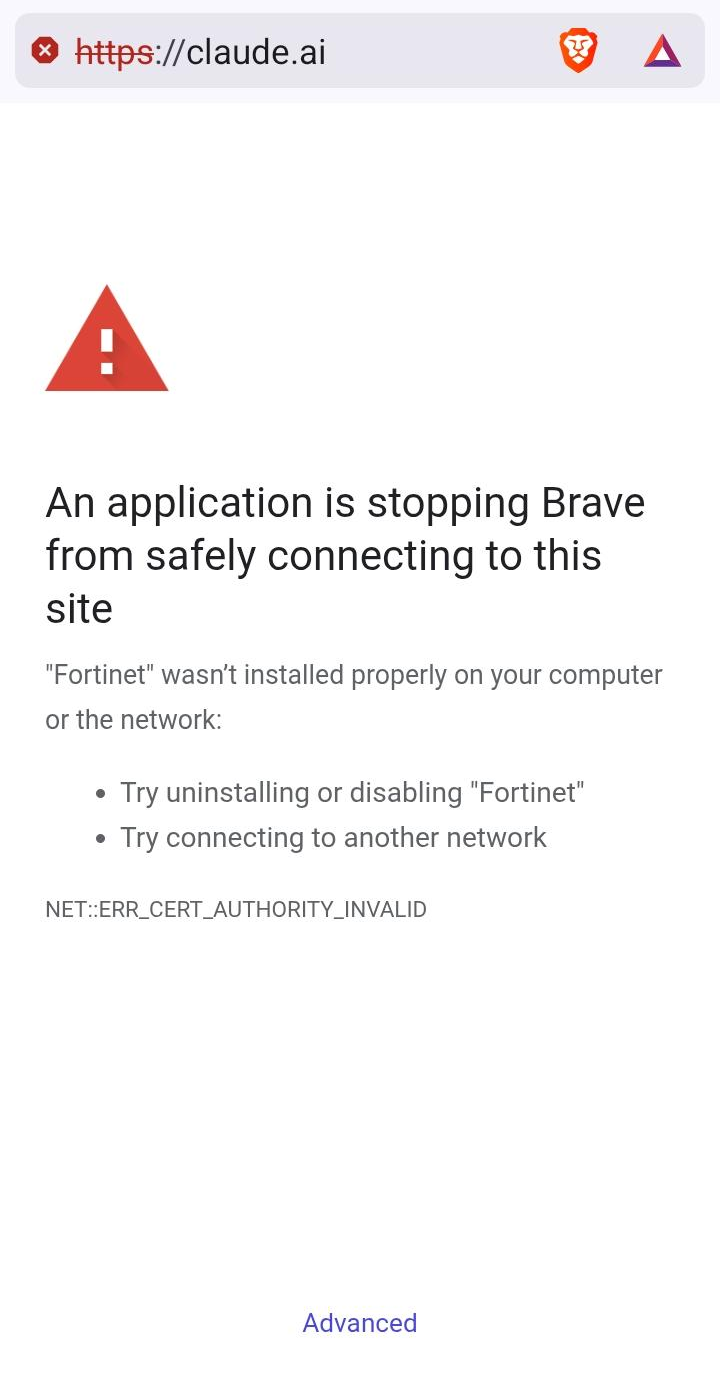
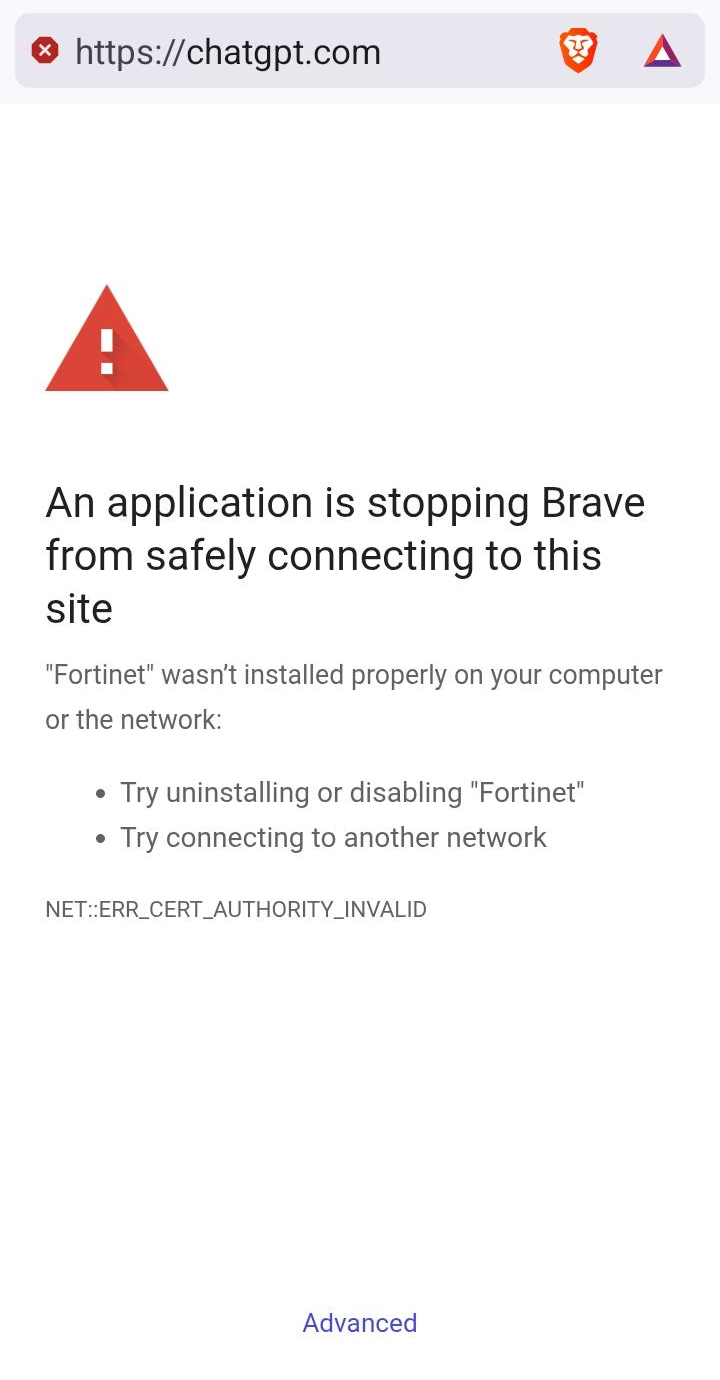
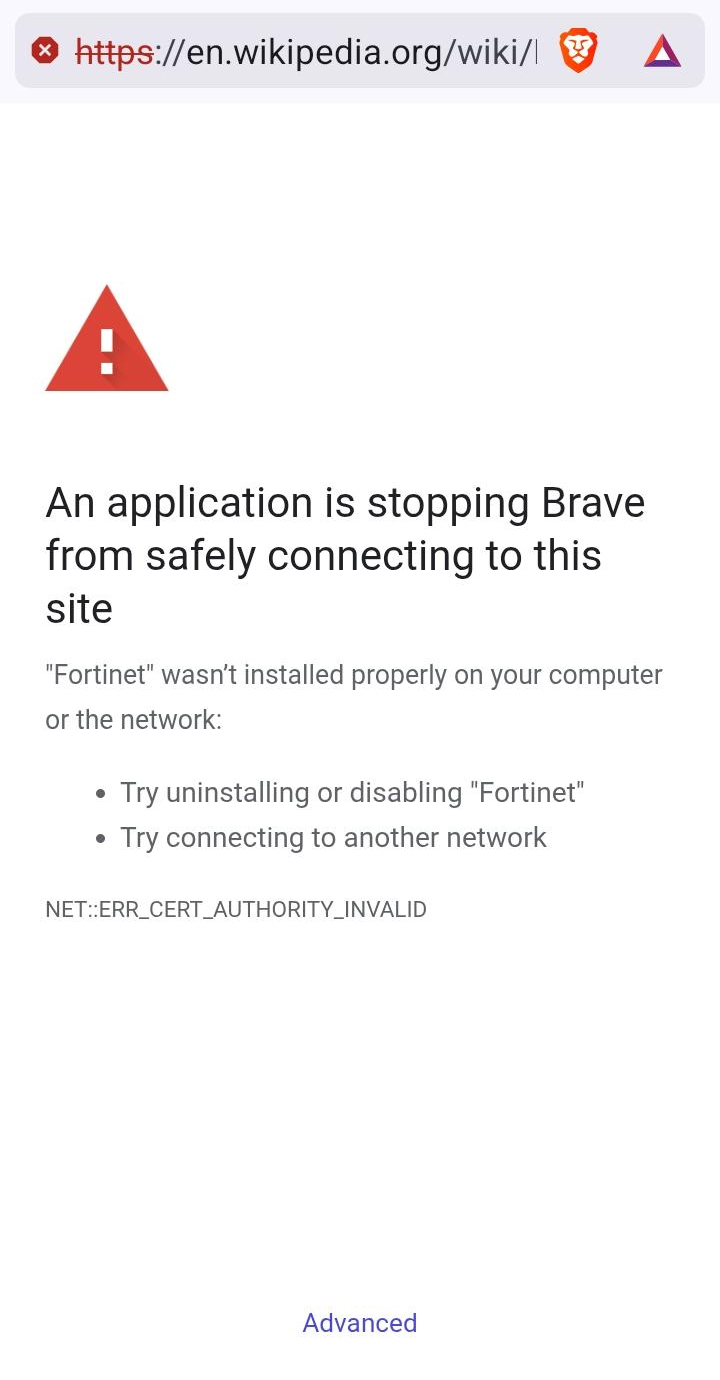
What the firewall blocked, on both devices:
- Claude, ChatGPT and every other AI tool I tried.
- Every VPN I tried: WireGuard, Shadowsocks, Mullvad.
- Wikipedia.
The error is NET::ERR_CERT_AUTHORITY_INVALID. The firewall decrypts each HTTPS connection and signs it again with its own certificate, which my devices do not trust. Brave suggests disabling Fortinet or connecting to another network. A patient can do neither.
2. What got through
SSH on port 22 was not blocked, so I could log in to my own server from the Mac.
          Fortinet
             |
 [Mac]   ----X---> claude.ai, chatgpt.com
 [phone] ----X---> wikipedia.org
         ----X---> WireGuard, Shadowsocks,
                   Mullvad, ...

 [Mac] == ssh :22 ==> [my server] --> internet
A network that allows SSH allows a tunnel. That is the idea behind sshuttle: a VPN over a plain SSH login, with nothing to install on the server.
3. sshuttle
sshuttle worked on the Mac, but slowly:
- Downloads ran at 12.8 Mbit/s, on a Wi-Fi that does 91.9 Mbit/s to sites it does not block.
- A small page request took 1.8 seconds, and 2.3 seconds while a download was running.
sshuttle relays every connection through one single-threaded Python process on the server, and all packets share one queue. It has served people well for years, but it was too slow for a working day.
4. sshuttle2
So I wrote sshuttle2 in Rust. Both ends are new code, and the idea is the same: the server needs nothing but an SSH login. On first run, the client uploads a small server binary (about 1.3 MB) over SSH and reuses it after that. It runs on macOS and Linux.
What is different:
- Rust at both ends.
- No Python in the data path.
- One SSH session, one channel per connection.
- Each channel has its own flow control, so a large download does not hold up other connections.
- Self-sizing windows.
- A channel's window grows while it limits throughput and shrinks when it only adds queueing delay.
- TCP, DNS and UDP.
- In tun mode, video calls, QUIC and games go through the tunnel too.
- Clean exit.
- Firewall rules and routes are removed on exit, also after a crash.
5. Results
Measured on the Mac, with the same Wi-Fi and the same server (2 vCPU, 4 GB) on the same day. Single samples. Repeated measurements on rented servers: benchmarks.
Page wait, idle. Shorter is better.
(one # = 80 ms)

no tunnel*     ##                       128 ms
sshuttle       ####################### 1817 ms
sshuttle2 pf   ##                       131 ms
sshuttle2 tun  ###                      211 ms
Download. Longer is better.
(one # = 4 Mbit/s)

no tunnel*     #######################    91.9
sshuttle       ###                        12.8
sshuttle2 pf   #####                      19.1
sshuttle2 tun  ####                       17.4
+---------------+----------+-----------+------------+
|               | download | page wait |  page wait |
|               |   Mbit/s |  idle, ms |   busy, ms |
+---------------+----------+-----------+------------+
| no tunnel*    |     91.9 |       128 |         65 |
| sshuttle      |     12.8 |      1817 |       2281 |
| sshuttle2 pf  |     19.1 |       131 |        338 |
| sshuttle2 tun |     17.4 |       211 |        223 |
+---------------+----------+-----------+------------+
* No tunnel: blocked sites stay blocked. pf mode: TCP and DNS. tun mode: TCP, UDP and DNS. Download: one 100 MB file. Page wait: time until google.com/generate_204 sends its first byte. Busy: while that download runs.
- Pages respond about 14 times faster than with sshuttle (1817 ms -> 131 ms), and about 10 times faster while a download runs (2281 ms -> 223 ms).
- Downloads are about 1.5 times faster (12.8 -> 19.1 Mbit/s).
- Downloads are still far below the 91.9 Mbit/s of the bare Wi-Fi. On rented servers, sshuttle2 fills a 100 Mbit/s link.
6. Links
I wrote sshuttle2 to get back to work. If you are behind a firewall that lets only SSH through, it may help you too. Bug reports and pull requests are welcome.
- Source code: github.com/allwinpower/sshuttle2
- Pull requests: github.com/allwinpower/sshuttle2/pulls
- Bugs and ideas: github.com/allwinpower/sshuttle2/issues
- Where the idea comes from: github.com/sshuttle/sshuttle